A small chip, a stubborn gap, or teeth that have dulled over the years can change how you feel about your own smile. When you start researching cosmetic options, two names come up again and again: composite bonding and porcelain veneers. They sound similar, they both improve the look of your front teeth, and they are often discussed side by side. The differences between them, though, are significant enough to shape your results for the next decade.
Choosing well starts with understanding what each option actually does and which one fits your teeth, your goals, and your timeline. At Manhattan Aesthetic Dentistry, Dr. Nargiz Schmidt brings more than two decades of prosthodontic training to that conversation, helping patients in Midtown East weigh the trade-offs honestly. Her minimally invasive approach to porcelain veneers has been the subject of international lectures, and she applies the same tooth-preserving philosophy to every cosmetic recommendation she makes.
How Composite Bonding Works
Composite bonding uses a tooth-colored resin applied directly to the surface of a tooth, then shaped and hardened with a curing light. The material is the same family used in tooth-colored fillings, applied here for appearance rather than repair. According to the American Dental Association’s patient resource on veneers and cosmetic options, composite material can be bonded to a tooth with relatively little enamel removal, which is part of what makes it appealing for minor corrections.
Bonding tends to suit small, targeted fixes. A chipped corner, a slightly gapped pair of front teeth, or a single discolored tooth can often be addressed in one visit. The trade-off is durability. Resin is softer than porcelain, so it can stain and chip more readily over time, and it may need touch-ups or replacement within several years, depending on your habits and bite.
How Porcelain Veneers Work
Porcelain veneers take a different path. A thin shell of dental ceramic is custom-made and bonded to the front of the tooth, usually across two to three appointments. That extra step buys a material that handles light much like natural enamel and resists staining far better than resin. Veneers are the stronger choice when you want to change several teeth at once or reshape a smile more comprehensively, which is why they anchor most smile makeovers.
Veneers also address concerns that bonding cannot fully resolve. They even out tooth length, close multiple gaps, and brighten teeth that no longer respond to teeth whitening. Dr. Schmidt’s minimally invasive protocols preserve substantially more natural enamel than traditional preparation, an approach reflected across her cosmetic dentistry treatments.
Comparing the Two Options
The right choice depends on your teeth, not just your goals. A few factors usually drive the decision one way or the other.
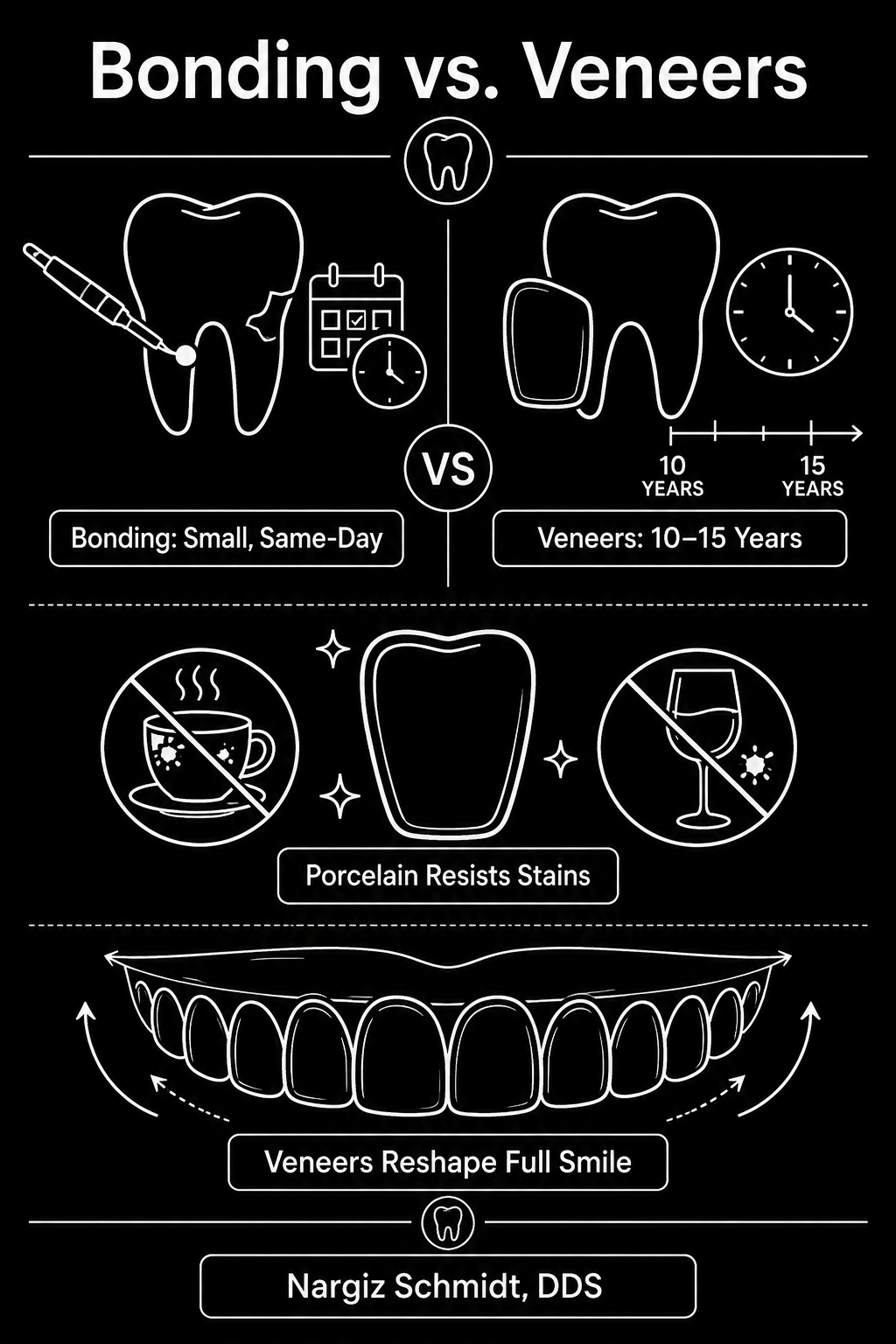
- Durability: Porcelain veneers commonly last ten to fifteen years or longer with proper care, while bonded resin may need repair or replacement sooner.
- Stain resistance: Porcelain resists discoloration from coffee, tea, and wine far better than composite resin, which can gradually darken.
- Scope of change: Bonding excels at small, isolated corrections, while veneers handle comprehensive reshaping across multiple teeth.
- Timeline: Bonding is often completed in a single visit, whereas veneers typically require several appointments for design and placement.
- Investment: Bonding generally carries a lower upfront cost, while veneers reflect the added laboratory work and longevity.
No single option wins for everyone. A thorough evaluation of your enamel, bite alignment, and aesthetic priorities is what makes the recommendation reliable.
Finding the Right Fit for Your Smile
Some patients arrive certain they want one option and leave with a clearer picture of what their teeth actually need. White spots, worn edges, or uneven tooth proportion sometimes point toward a comprehensive plan, while a single minor flaw may call for something far simpler. The depth of the concern, the location of the affected teeth, and your long-term goals all factor into the choice, and a careful diagnosis prevents disappointment later. You can read more about conservative options for surface discoloration on the practice’s white spot removal page.
Plan Your Cosmetic Consultation at Manhattan Aesthetic Dentistry
Deciding between composite bonding and porcelain veneers is far easier with a clinician who has seen thousands of smiles and can tell you candidly what each approach would mean for yours. Dr. Schmidt has completed more than 15,000 porcelain veneer cases and lectures internationally on minimally invasive aesthetics, and her fully digital workflow lets you preview potential results before any treatment begins. That combination of prosthodontic training and tooth-preserving philosophy is what helps patients in Midtown East feel confident in the path they choose.
If you are weighing your cosmetic options and want a clear, honest assessment grounded in your individual needs, the practice welcomes the conversation. Schedule a consultation through the contact form to discuss which approach may be right for your smile.