
White spots on teeth are more common than most people realize, and more bothersome than their small size might suggest. These chalky, opaque patches form when enamel loses mineral density, creating areas that reflect light differently than the surrounding tooth surface. Orthodontic treatment is a frequent culprit, as brackets and wires make thorough cleaning difficult, and plaque acids can quietly demineralize enamel over time. Fluorosis and developmental factors account for many other cases. Whatever the cause, patients often find that white spots are the last thing standing between them and a smile they feel good about.
At Manhattan Aesthetic Dentistry, Dr. Nargiz Schmidt, DDS, takes a gentle, detail-focused approach to removing white spots from teeth. With more than 20 years of experience and a background in teaching dentists worldwide, she focuses on improving the appearance of the enamel while preserving as much of the healthy tooth structure as possible. Our white spot removal services in Midtown East are designed to treat the uneven areas in the enamel, rather than covering them with restorations that require more tooth preparation. For patients who have felt self-conscious about these spots for years, treatment can make a meaningful difference in how their smile looks and feels.
What Causes White Spots on Teeth?
White spots are not just surface stains that can be polished away. They form inside the enamel, just beneath the outer surface of the tooth. When that layer loses minerals or develops unevenly, the enamel becomes less dense and starts to look chalky or white. This can happen due to acid exposure, plaque buildup during braces, a fluoride imbalance, or enamel changes that developed earlier in life. Research published in PubMed Central explains that white spot lesions can alter how light travels through the tooth, giving them their noticeable cloudy appearance.
Understanding the cause of a patient’s white spots is important because it helps guide appropriate treatment. Spots that appear after braces may not respond the same way as spots caused by fluorosis or enamel changes that developed earlier in life. That is why an experienced dentist will look closely at each case before recommending the best way to create a natural-looking, long-lasting result.
How Is White Spot Removal Performed?
The appropriate treatment depends on the depth, cause, and severity of each lesion, which is why a thorough clinical evaluation is always the starting point.
Conservative and Minimally Invasive Options
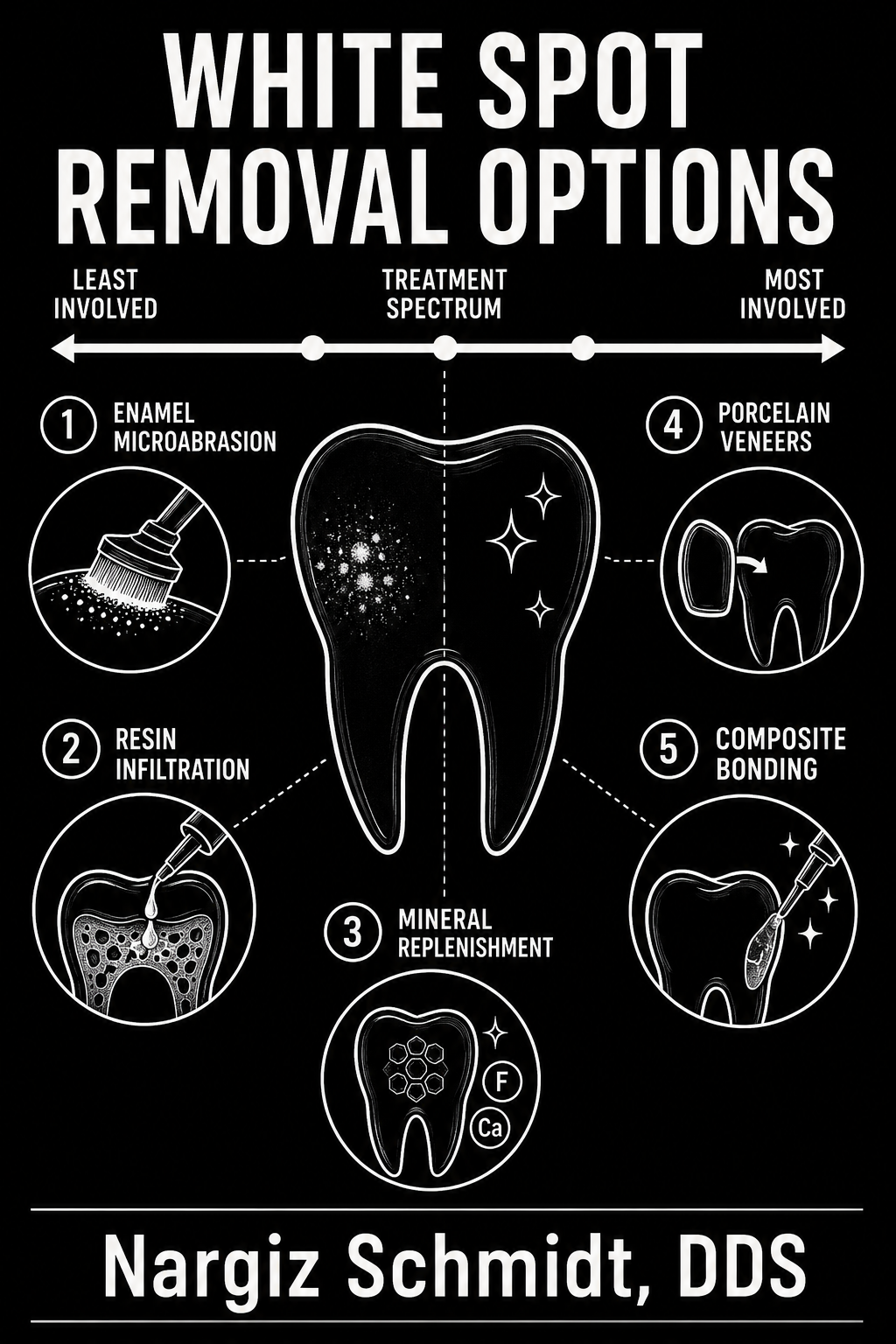
For shallow white spots, microabrasion can gently remove a very thin layer of discolored enamel with a mild acid and polishing paste, often in just one visit. For spots that reach a little deeper, resin infiltration can help by filling the weakened enamel with a tooth-colored resin so the area blends in better with the surrounding tooth. When the enamel is still intact and the spots are in an early stage, professional remineralization may be used to help rebuild mineral strength with treatments that include calcium phosphate and fluoride over a series of visits.
When Advanced Aesthetic Solutions Are Needed
When white spots are more severe or coexist with broader cosmetic concerns, porcelain veneers offer a comprehensive solution that addresses discoloration alongside shape, size, and color in a single treatment. Dr. Schmidt has completed over 15,000 porcelain veneer restorations using minimally invasive techniques that preserve as much natural tooth structure as possible. For cases that fall between microabrasion and veneers in scope, composite bonding provides a conservative middle-ground option that can be completed in a single appointment.
Why White Spot Removal Matters Beyond Aesthetics
White spot removal is often seen as a cosmetic treatment, but these spots can also point to areas of weakened enamel. When left untreated, they may become more vulnerable to further mineral loss and tooth decay over time. Treating them early can strengthen the enamel and make the tooth look healthier and more even.
For patients who finish orthodontic treatment and then notice white spots on their newly straightened teeth, this can feel especially frustrating. The good news is that these spots are often highly treatable. With the right minimally invasive approach, treatment can help the enamel blend more naturally with the surrounding tooth structure and restore a smoother, more balanced appearance. White spot removal may be the main reason for treatment or part of a larger smile makeover, but in either case, a careful plan helps the final result look natural instead of simply corrected.
Your Smile Deserves a Specialist’s Precision
White spots on teeth may seem small, but they can have a real impact on how someone feels about their smile. The right treatment should improve the tooth’s appearance without removing more healthy enamel than necessary. At Manhattan Aesthetic Dentistry, we focus on that balance with every patient we treat.
Dr. Nargiz Schmidt, DDS, has dedicated her career to treatments that preserve tooth structure and deliver long-lasting results. From the initial evaluation to a fully digital smile design process, every recommendation is tailored to your individual anatomy and aesthetic goals. To explore whether white spot removal is the right next step for your smile, we invite you to contact our office.